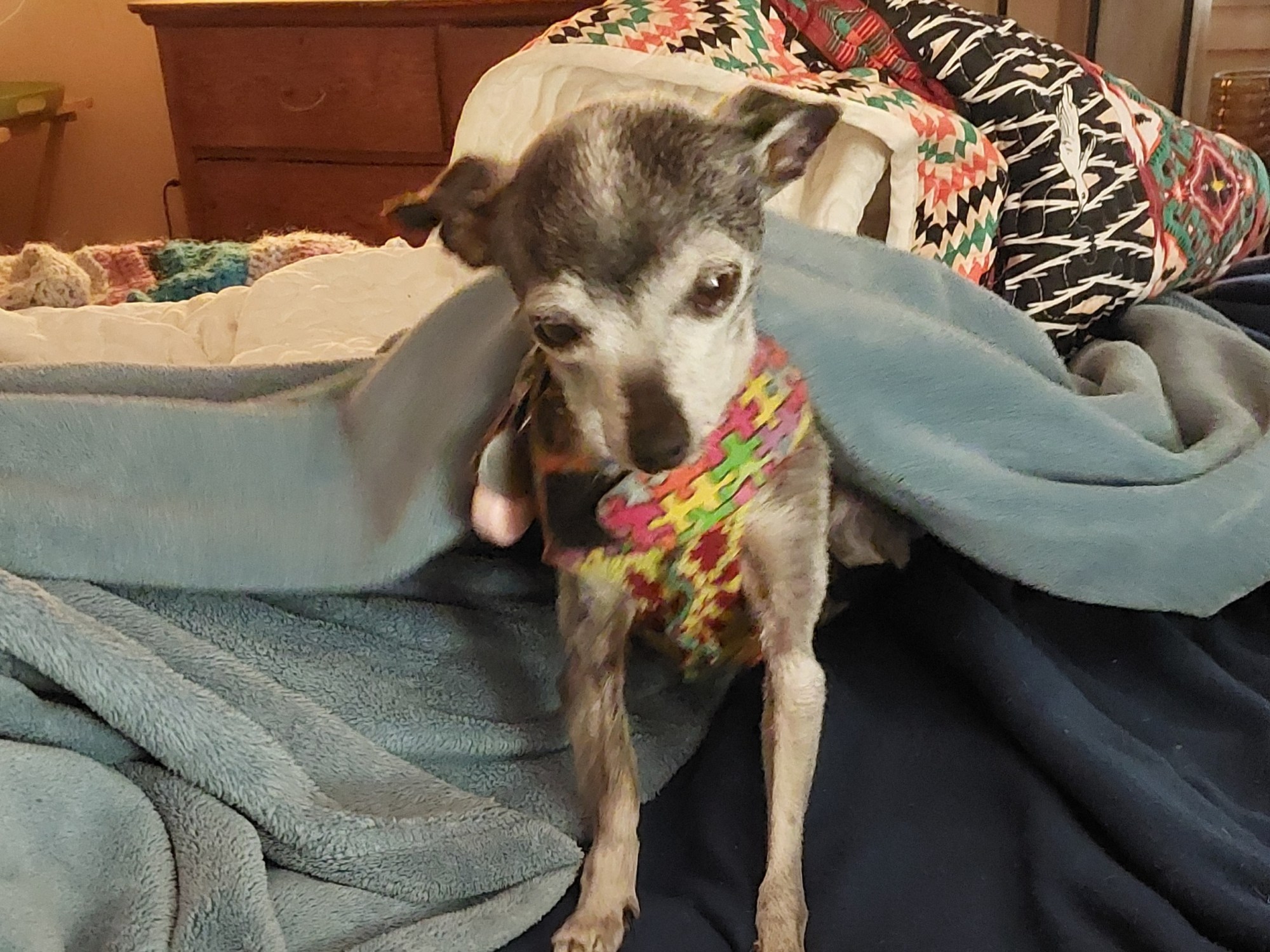
After the exam at Urgent Car in Durango, I pulled into a neighboring parking lot to make hotel reservations. Cimarron was doing well enough now (even the vet talked about how “bright” she looked) that I could feel my own body’s adrenaline start to drop. In addition to booking a hotel back in Cortez, I located a place with a dog friendly porch for lunch.

I wasn’t sure how Cimarron would do at the resteraunt, but she didn’t want to ride in the stroller. During the hour we were there, she only had one short honking episode. She was hungry. We all were. No one had eaten and it was now almost 1 PM. Cimarron wanted up on my lap because she knows where to food comes from. I helped her some, but she would have jumped had I not helped. She clearly wanted my Navajo Taco.
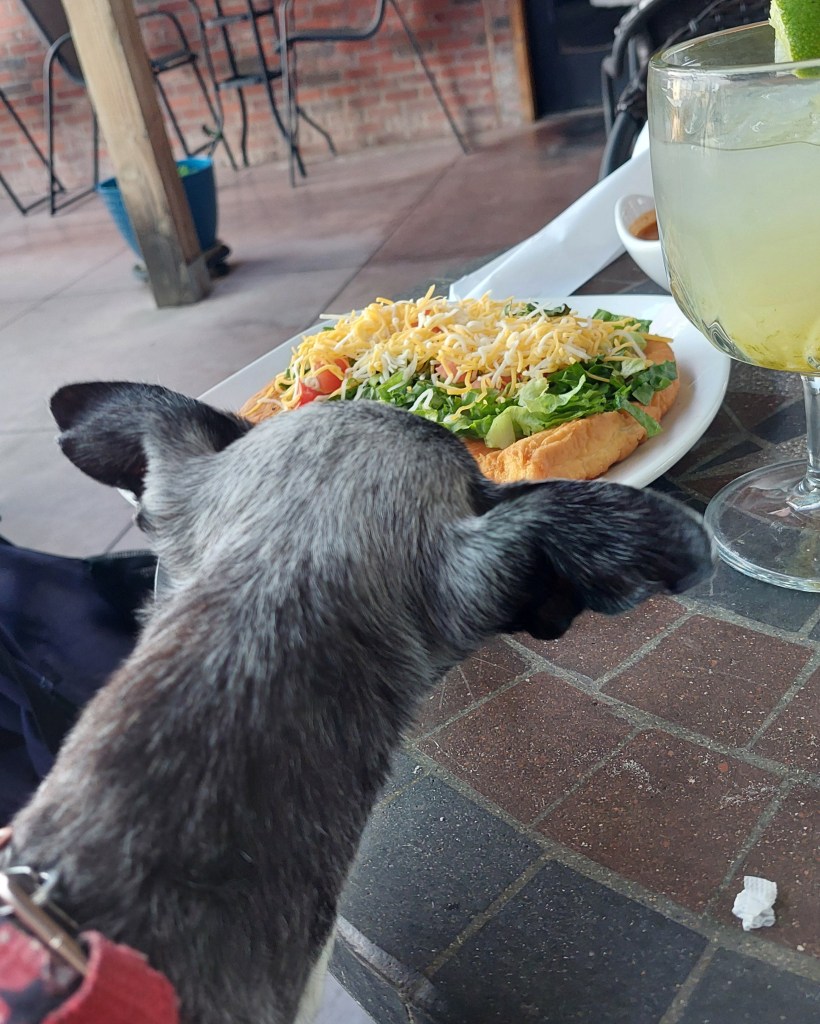
After lunch, we headed to the park so the dogs could have their real breakfast. Late meds for all and Cimarron’s first doses of lasix and antibiotics. Cimarron was acting pretty normal by now and gobbled down her food after getting her meds. After that, it was finally time to check into the motel. I was a little worried she would honk all night and disturb the neighbors – but she settled into a nap with her sisters and I on the bed. She was happy, hungry, and attentive. I was very optimistic.
It was that evening (after the nap) chatting with a friend on Facebook that my optimism got a reality check. A friend who has older small dogs and knows a lot about caring for them asked if it was CHF. “No”, I replied, “it doesn’t fit” – even through it is what urgent care thought. Then she asked about collapsing trachea. I said “Maybe, the vet had mentioned it originally.” She told one of her dogs with heart disease had developed collapsing trachea and only lived 2 months. Two months? I reassured myself that Cimarron was not in CHF and her prognosis was probably better – but this was my first taste of reality.
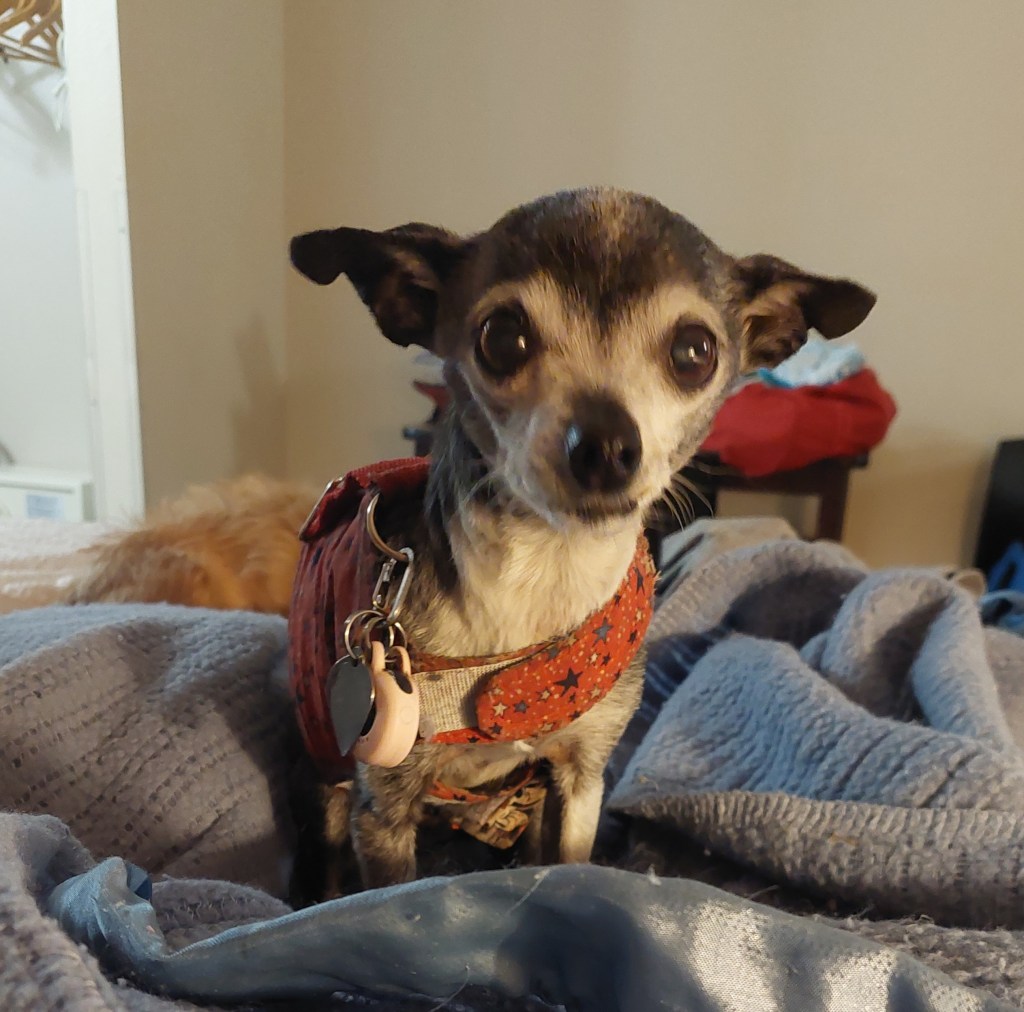
That night, Cimarron slept peacefully. No honking, but some gagging. I decided to head back to Hovenweep and spend the last night there, pack up our gear the next morning, and head home. The first thing I did when we got back to the campsite was to email her local vet a timeline of the incident so she would have a clear story (no CHF) before our visit. I pieced some things together from web searches – maybe the reflux had caused her bronchi to be inflammed? Maybe it was CT along with the enlarged left heart pressing on her lower bronchi? That was my theory and I said it as clearly as that because I knew her kidney function the previous year was borderline – and I was concerned about her being on Lasix if she wasn’t in CHF.
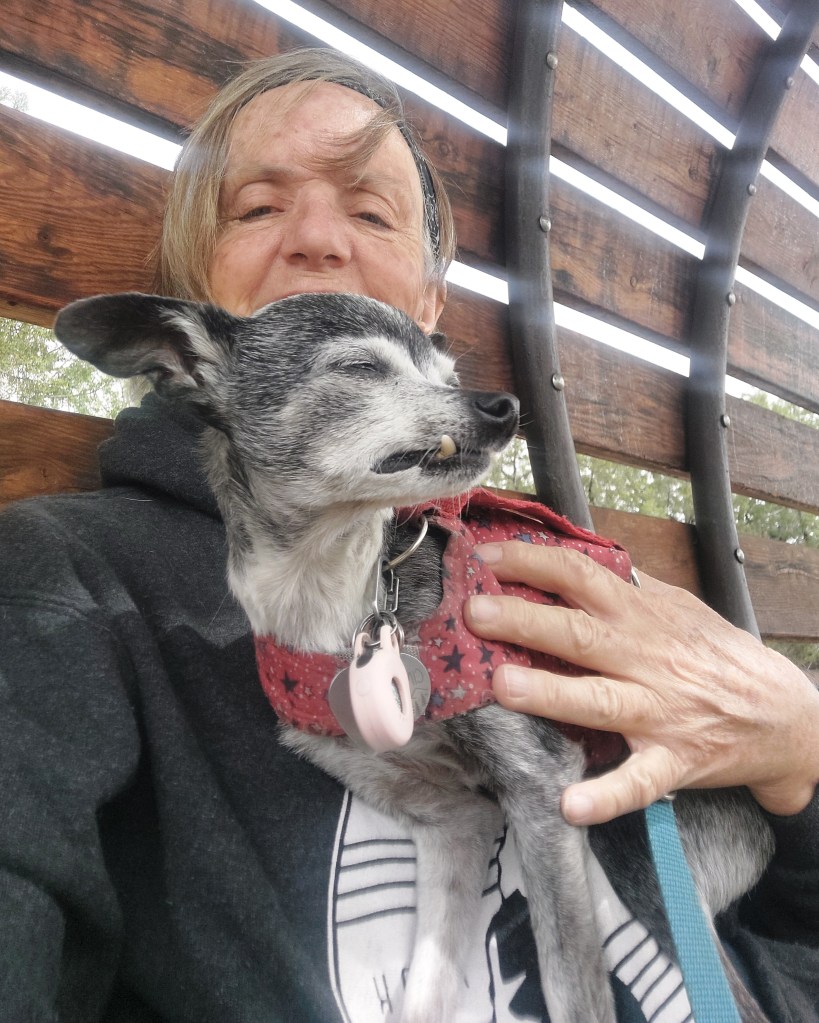
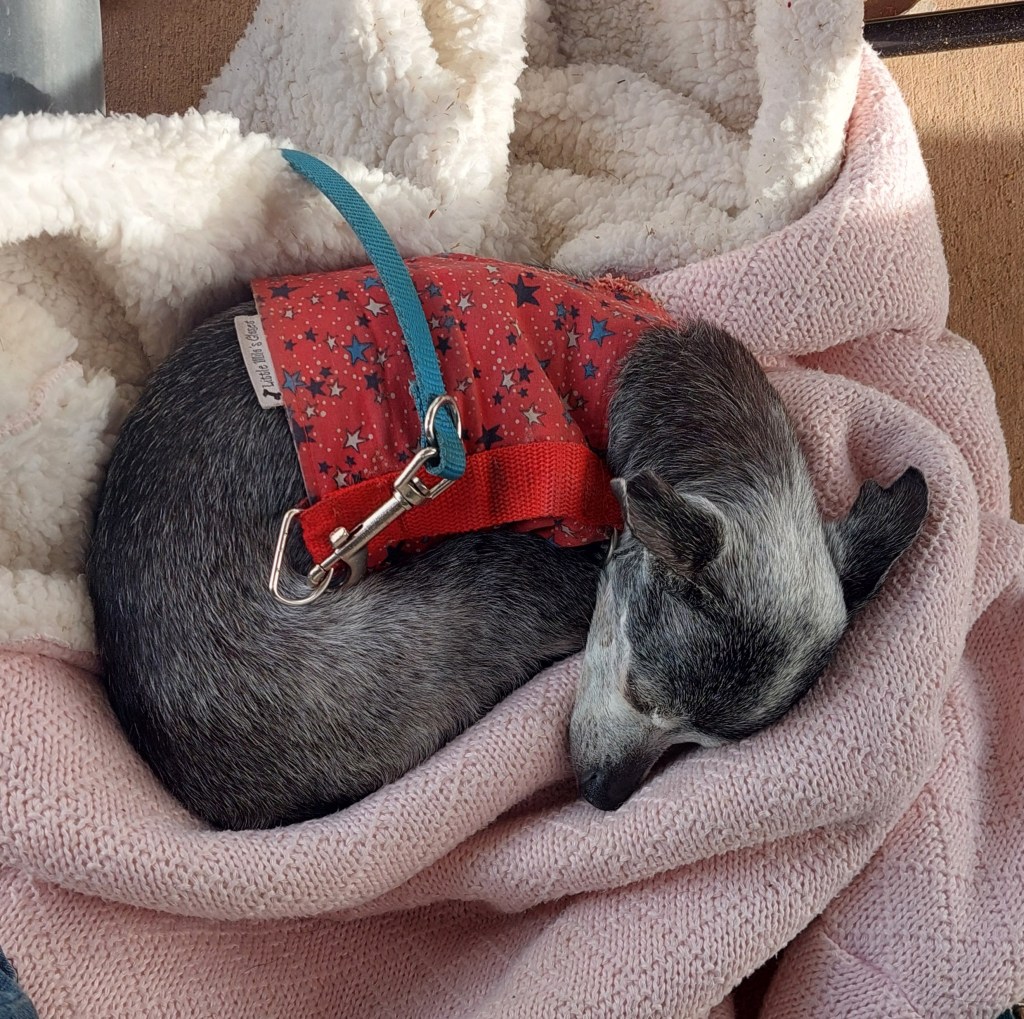
The night was uneventful, except me checking to be sure she wasn’t nuzzled down in her bag. She didn’t want to nuzzle down, either. No honking. I felt so optimistic that she was getting better that we took a very short hike at Painted Hand Pueblo on the way home the next day. She was engaged and happy – no excess panting or signs of respiratory distress. She slept over the pass, although she did awaken at the summit and coughed a couple of times. That was Thursday.
At home, we settled back into our routine. I left her for a doctor visit on Friday and to move to my new vendor booth on Saturday. We didn’t take evening walks that week, I was busy trying to get my business caught up and there was intermittent rain. Cimarron continued to fly up and down the stairs with me. I pondered what had happened. Was she smothering in her bag – was that the trigger? That stuck with me enough to share it with her local vet in a follow-up email.
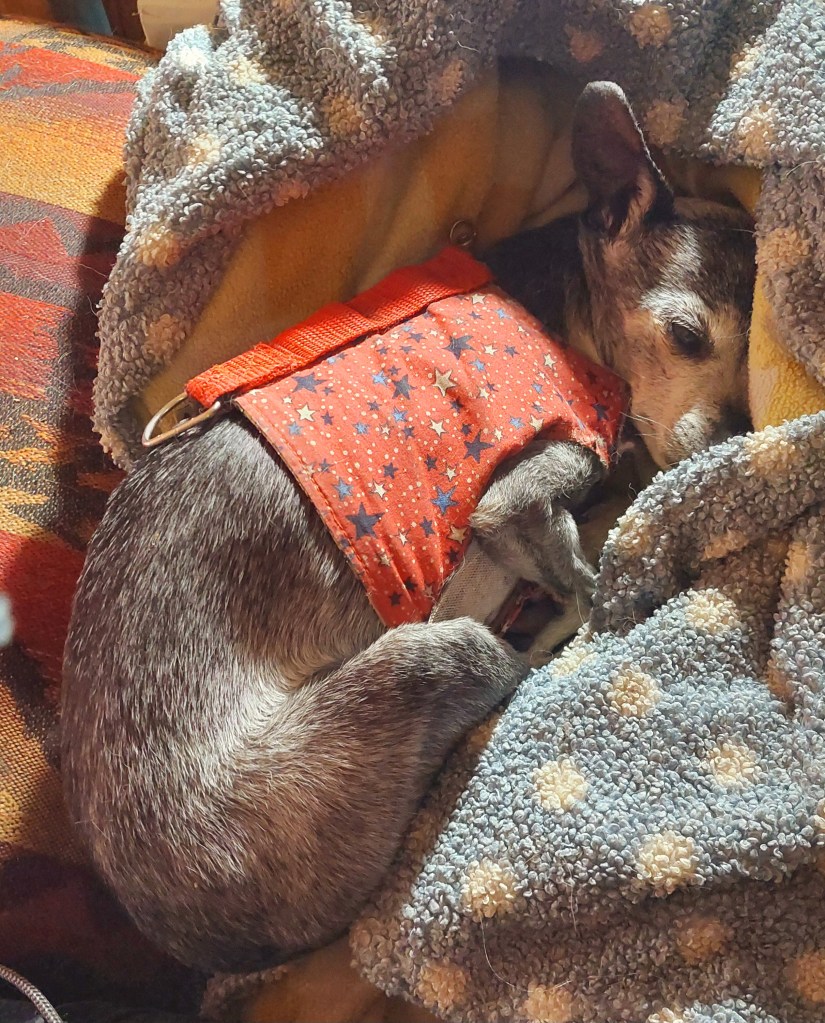
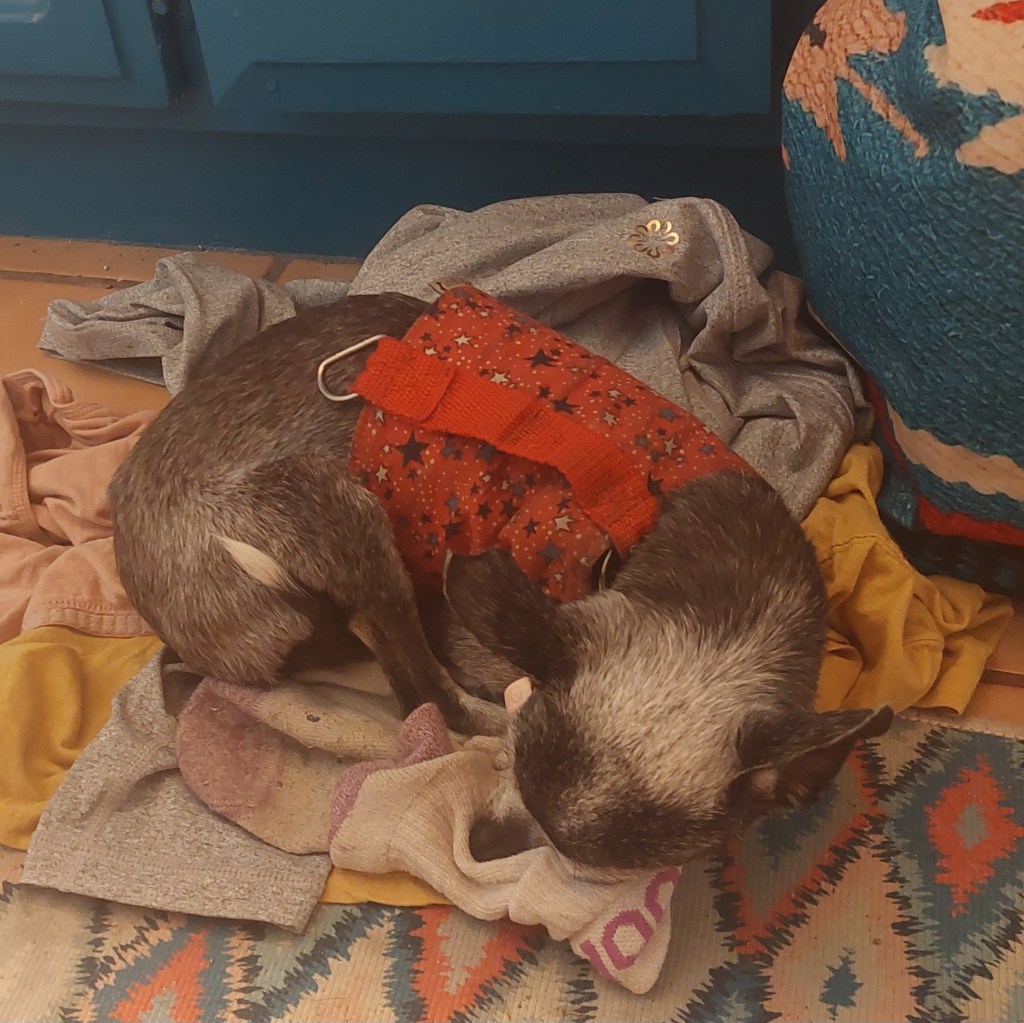
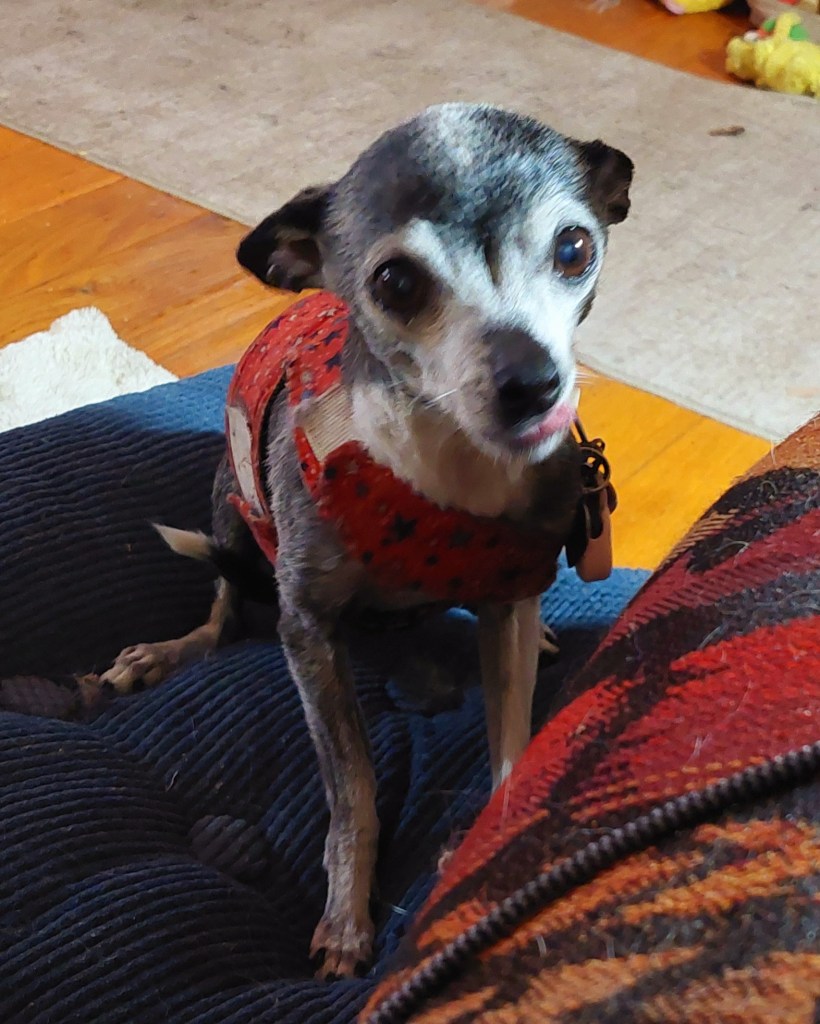
Tuesday was our vet appointment. I was ready for answers, maybe cough suppresant. I had laid out my case and I felt my medical credentials would make it credible. My friend’s experience with collapsing trachea fit the honking cough and enlarged heart. But Cimarron wasn’t in CHF, so her prognosis might be pretty good if we could treat the collapsing trachea. She needed to get off the lasix to give her aging kidneys a chance – and that was also my focus.
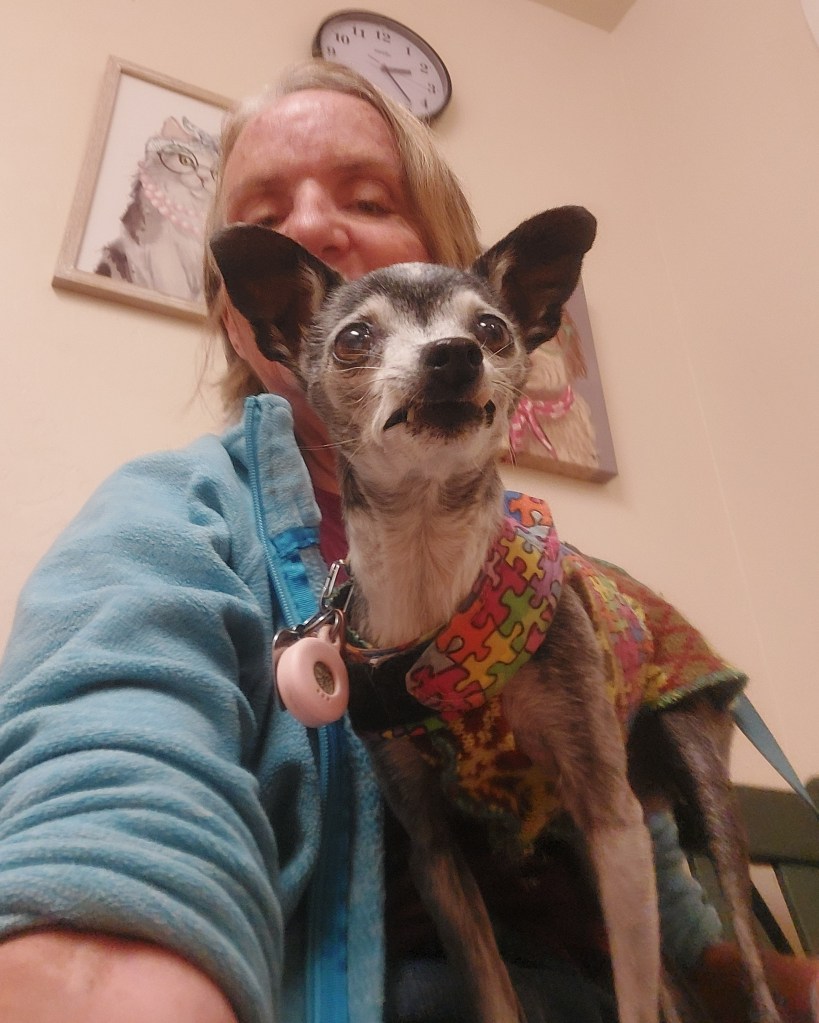
The vet agreed that she wasn’t in CHF and that a lasix wean made sense, although she couldn’t advise on how to time that. As far as my collapsing trachea concerns, I didn’t feel listened to, which surprized me because I like our vet. I was given a lecture on the airway and why this wasn’t collapsing trachea – how it was likely allergies and a small fistula in her nose. But what caused the “seizure?” I asked. The vet explained a seizure would be most likely caused by a brain tumor (urgent care had said the same thing) and whatever caused it would return. It felt like I got a shrug and no management plan for collapsing trachea. Just allergies and a brain tumor – that made no sense to what my medical brain had heard and witnessed.
I left still hoping for the best. An accute episode of collapsing trachea triggered by reflux from a seizure that was triggered by an acute event or some sort. But, my friend’s experience with collapsing trachea stuck with me, the trachea symptoms would likely return. Cimarron needed the right treatment and the large animal-focused vets were missing this piece. My vet emailed later that day, concerned about her SDMA. I was frustrated – what about the lasix’s impact on her kidneys? The last thing she needs is to start losing weight from a tastless food. I started researching specialists in the region that evening.
I came across VCA Tiara Rado Animal Hospital in Grand Junction. Their website said they offered echos and internal medicine. There was a gap in such services anywhere closer than Denver for a few years, but I knew this hospital from my dog, Maizzy’s echo 10 years earlier. I was relieved there were services back in the region.
During the night, the cool air, rain and humidity rolled in. I woke up to that horrible honking, again. My heart was broken, Cimarron wasn’t fixed. I called the local vet to discuss the labs, etc and she emailed back an hour later about starting her on kidney food, again. It was then that I called Tiara Rado to schedule her for an evaluation. Their specialist was booked but they wanted to get her in, so they would shift his schedule and call me back with a time. I was to send records. I informed my vet that I was scheduling with the specialist before any change in diet. She agreed with the plan.
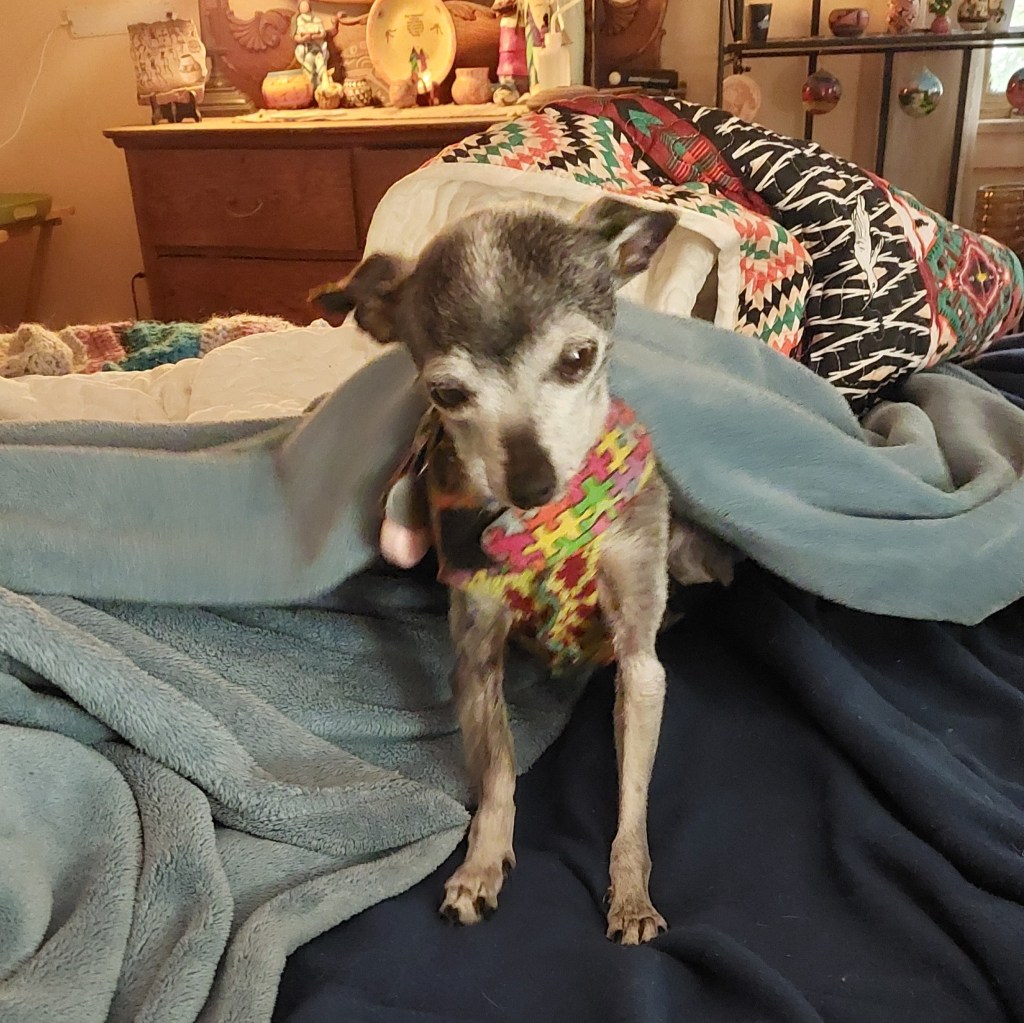
I spent the better part of the day putting together a case study and getting records from the local vet and urgent care. I sat by Cimarron and did everything I could to keep her warm and comfortable. I figured her quality of life score for the case study and only subtracted 3 points. The next day, all of that would start to change. It began with her missing the last two steps when I went to the basement to put clothes in the washer – this time she sat at the bottom of the stairs. I thought she had hurt herself, so I went down and carried her up. That was a first.
More to come soon . . . Doc Cathy
This is a series of blog posts discribing my 6 pound soul dog, Cimarron’s, final life journey. I am sharing this to help other dog owners recognize early signs of tracheal collapse and mitral valve disease (with or without congesting heart failure). I may be Doc Cathy (Doctor of Nursing Practice), but I had a lot to learn during these final weeks. I learned a lot about navigating the rural, ag-focused vet system that I will take forward to my future rescue work.


3 thoughts on “Cimarron’s Final Journey (Part 3): The Good Days, a Missed Diagnosis, and the Cough Returns”